

I review Milan Kundera’s coveted novel The Unbearable Lightness of being, exploring what it means to love and date in a turbulent society.
Milan Kundera’s magnum opus, The Unbearable Lightness of Being presents a distinct view of love, lightness and weight in the journey of its central characters. Tomas and Sabina are representations of lightness whereas Teresa and Franz represent the weight. In Kundera’s conception of love, feelings and sexual desires are different entities that may or may not be attributed to the same person, a fair encapsulation of the contemporary dating scene. For Kundera feelings, emotions and poetic memory are a part of love whereas sexual desire and physical intimacy is what Kundera calls non love.
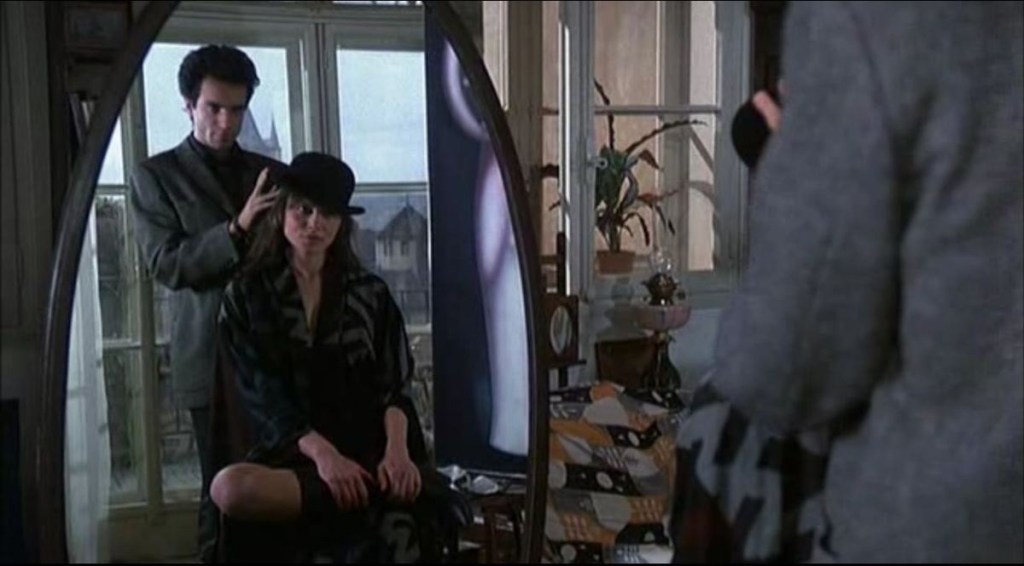
Tomas and Sabina, through erotic friendships and non love, are able to create a lifestyle that cultivates relationships by establishing a compromise between fear and desire by steadfastly avoiding any genuine emotional involvement in their relationships. In doing so Tomas becomes a connoisseur of what Kierkegaard called ‘the rotation method’.
Tomas called it the rule of three he would meet each of his long-term mistresses only at intervals, “Either you see a woman three times in quick succession and then never again, or you maintain relations over the years but make sure that the rendezvous are at least three weeks apart.”
Sabina’s relation with lightness, like Tomas’, allows her to engage in sexual relationships without any emotional connection, however, she moves a touch ahead of Tomas by the virtue of her ability to betray everything. She abandons her relation with Tomas, her family and eventually her country.
Love and Non love
The differentiation between love and non love relates to the leitmotif of heaviness and lightness in the text. Lightness has two meaning, it is the normal state of consciousness, the condition in which we pass our time, from which no story can develop and no identity be shaped. In another sense lightness is a state of endless promiscuity in which each sensation is abolished by its successor, each individual by the next one. Non love is a form of lightness which exists beyond meaningfulness and morality. Love is a form of heaviness, the antithesis of lightness. It’s the baggage of the past coupled with the weight of feelings and future aspirations.
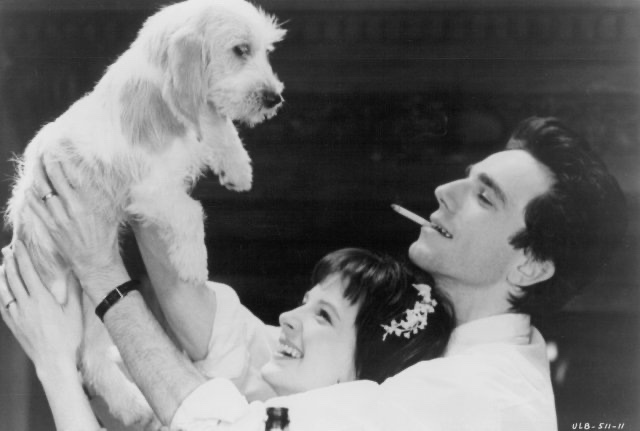
The notion of non love brings the idea of faith to the fore. Does Tomas sleeping around make him unfaithful to his long term partner, Teresa? Tomas following Teresa back to Prague in the midst of the Russian invasion proves that he deeply cares for Teresa.
“He had come to feel an inexplicable love for this all but complete stranger; she seemed a child to him, a child someone had put in a bulrush basket daubed with pitch and sent down-stream for Tomas to fetch at the riverbank of his bed.”
It’s empirical to note here that Kundera doesn’t use the term ‘faithful’ in a general sense and that for him love and love making are two different things. In spite of having countless affairs, Tomas remains faithful to Teresa till the end of their lives. The text also explores faith as a two-faced notion ‘Amar Farti’ (love for fate) as explored by Nietzsche and the Stoics. It refers to faith as both -in responsibility and as an escape from it. For instance, Teresa leaves her home town to change her fate but she also regards Tomas as her fate and hence finds it hard to leave him.
Light and Darkness in a Socialist utopian society
The heterodiegitic narrator refrains from psychologically probing the characters to allow his characters the privacy a Socialist regime can’t provide. Instead, he uses mediums like the lexicon of misunderstood words between Franz and Sabina.
“LIGHT AND DARKNESS- Living for Sabina meant seeing. Seeing is limited by two borders: strong light, which blinds, and total darkness… In Franz the word light did not evoke the picture of a landscape basking in the soft glow of day; it evoked the source of light itself: the sun, a light bulb, a spotlight.”
Franz is the only character who remains same in terms of existential changes. He misinterprets the signs that Sabina gives him which means his changes are situational not existential.
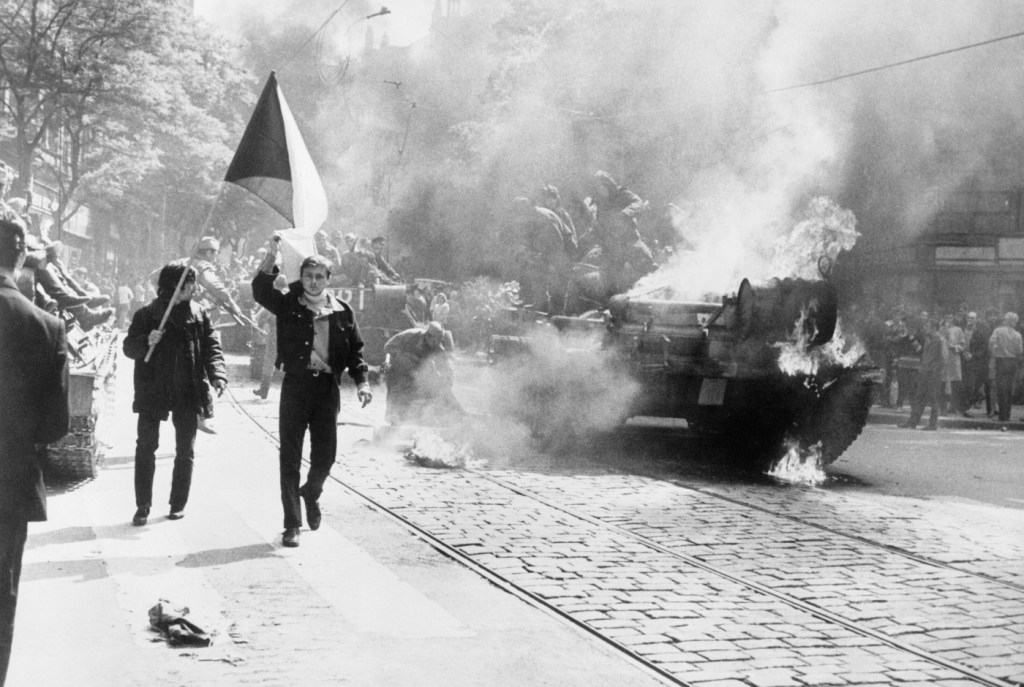
Through the idea of non love and erotic friendship, Kundera shows how the socio-political macrocosm percolates into the microcosm. “Communism in practice cannot conquer the private life, but makes it light and meaningless, weightless and cynical.” For Tomas and Sabina the notion of socialist utopia and national brotherhood creates a banal existence which imposes itself in almost all spheres of life except one, that is, erotic friendships. Non love then becomes a cynical outcome of the communist regime instead of a lust driven exploit.
Non love- the outcome and the challenger of the regime
Through Tomas and Sabina, Kundera shows how the omnipotent communist ideology gets challenged by non love in the microcosm. Kundera suggests that erotic intimacy promises a real, if already threatened, refuge for individuality in the modern world; hence he often insists that his books are essentially love stories. We see the two characters drawn on the idea of non love challenging the regime in other ways as well, Tomas through his article and Sabina through her improvisation of the Socialist Realist paintings. The characters challenge in the novel is matched by Kundera’s outside the text who creates a work that provokes Socialist Realism by creating an open-ended book.
Further by revealing the conclusion of the novel much earlier than expected, the narrator eliminate suspense and “lays bare” his technique with all its complexities. In doing so Kundera forces the reader to read beyond the well scripted lines of a closed-ended Realist plot. The open ending leaves enough room for the reader to think but not enough that it draws apathy. The reader is thus able to see how love becomes light for Tomas and Teresa and how non love becomes heavy for Sabina.
Read more reviews https://atomic-temporary-214427647.wpcomstaging.com/eduardo-lalos-simone-a-review/

 Deskripted
Leave a comment