
Eduardo Lalo is a Puerto Rican novelist who won the Rómulo Gallegos Prize for his novel Simone in 2013.

Simone paves a different path for itself changing course from the radicalism commonly attributed to Latin American literature. While most radical writings focus on the Latin American community as a whole and forefront the problems of the community, especially post colonialism, Lalo focuses on the invisible individual in the community. “He stubbornly rewrites the world from a broken, dirty, and sometimes insignificant space.” In Simone, this individual is an unnamed professor of literature in San Juan who discontent with his life, his countrymen, his profession and love finds himself perpetually stuck in a city that he cannot escape. In doing so, Lalo forefronts themes that are relatively unrepresented in Latin American literature for instance, in Simone the literary culture of Puerto Rico, the plight of Chinese immigrants and the malaise of the Latin American community which is so full of its own sorrows to see the sorrows of others.
Eduardo Lalo & the representation of the city
Unlike the popular representation of San Juan and Puerto Rico, Eduardo paints these commonly viewed happy havens as soulless places. He pictures a grey and desolate geography that has been devastated by centuries of colonialism and a tradition that, from the discovery of the Americas onward, has denied its culture and recorded in it an alien form we call the novel. With its steady existence on the periphery of the world, San Juan and Puerto Rico get represented as the symbols of stagnancy.
His situation is further worsened by his profession as a writer. He highlights how purposeless and meaningless literature or teaching literature is in a place like Puerto Rico. In a marginalised community that is restricted to a hand to mouth existence, reading becomes a luxurious pursuit and books, an emblem of cultural superiority that come to be resented.
“At this hour, already well into the morning, nobody even has a newspaper. When I sat down and pulled the book out of my backpack, I felt a slight, distant sense of shame. As if I were making a fool of myself in the schoolyard.”
Lalo, Simone
Reading, writing and the Latin American literary culture

The university culture of Puerto Rico does nothing to help the protagonist either. He regards the plethora of conferences, talks and seminars as platforms given to pretentious scholars, Carmen Lindo being the prime example, who gain merit through contacts among peers and by dropping heavy names in talks among students.
“That’s how I spent my day, dreaming of coffee breaks, incredulous to find someone capable of citing Deleuze and Gabriela Mistral in the same sentence just like that, without forewarning or footnotes, yoked together by a conjunction that both linked and disfigured their meaning.”
Lalo, Simone
In this world, the narrator lives alone in complete alienation of his surroundings. Journaling his life becomes the only coping mechanism that he has access to.
“I used to think I was struggling against the society I was forced to live in. Against this city. Against the unbearable succession of classrooms where I’d made my living until, I landed a steady job… But now I know that struggling and writing are the same thing.”
Lalo, Simone
That is until Li and her messages come along with her pastiche writing. Li is able to connect with the protagonist even before he has met her. But theirs being a romance set for heartbreak leaves the protagonist even more alienated and helpless in his surroundings.
“What was left was the city, the turf where I still belonged, despite it all. I inscribed its surfaces with my naked grief, tormented, one moment on the verge of tears, the next seething with anger. I’d never be able to leave this city.”
Lalo, Simone
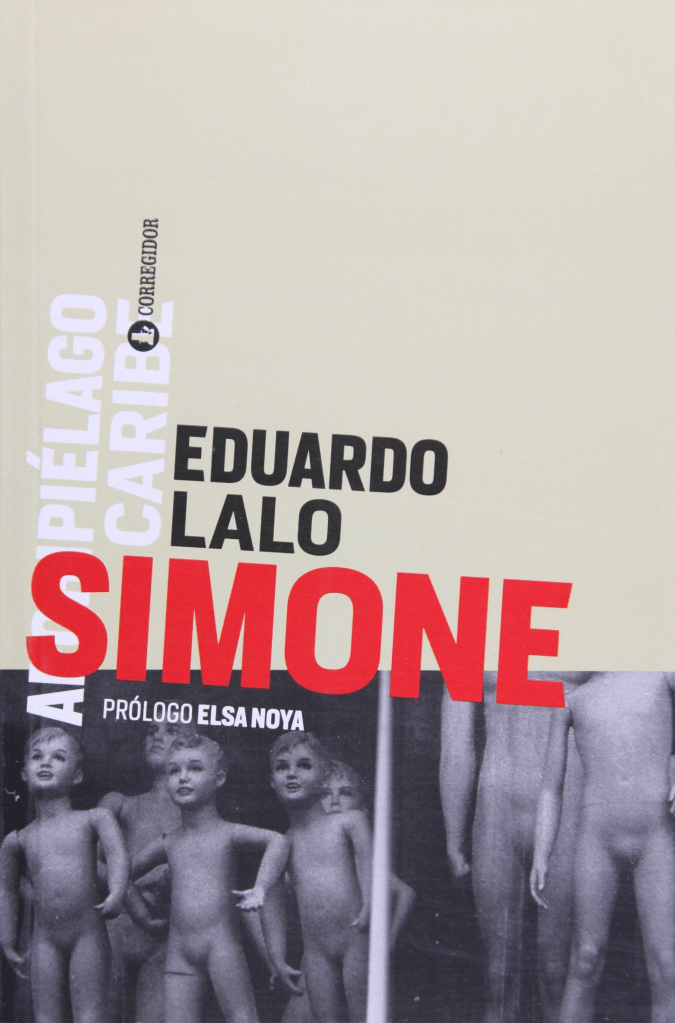
In the act of journaling his life, the protagonist opens the door to metaficitional literature. His journal records his journey as a writer and the various trials and tribulations that come with it.
Lalo uses this setup to present the angst of the protagonist. He portrays the protagonist’s struggle as a writer and a teacher in a country where the people are indifferent to literature and arts due to their socio-economic circumstances. Further, he exemplifies how Puerto Rican writers get lesser recognition than other Spanish and Latin American authors by the debate between Maximo Noreña, the protagonist and García Pardo, a popular Spanish author who also serves as the voice of the commercial publishing industry and its colonial underpinnings. Above all, using the metafictional setup, he forefronts the sadness and alienation that haunts the protagonist in the form of a constant fear that he is forever bound to the place and have no escape from it. The metafictionality of the text becomes a window to the implicit revulsion and dystopia endured by the protagonist.
“No master of this city—none of its mayors—care about this city as I’ve cared about it because I know that I have no way out, that I’ll never be able to leave.”
Lalo, Simone
The Chinese Puerto Rican Woman
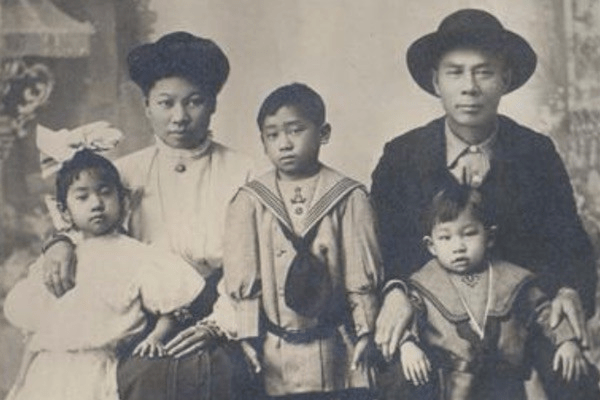
If the alienation endured by the protagonist is bad, the alienation endured by the Chinese immigrants in Puerto Rico is much worse. With the entry of Li, the racism and socio-economic difficulties faced by the Chinese immigrant minority come to the forefront. The Chinese are only regarded as the “other” that exists without an identity. For all her literary and artistic talent, Li is remembered by all as merely a ‘Chinita.’
“When we [the protagonist and Li] went outside some people stopped to stare. We were hardly a circus act, but I’m sure that they sensed our strangeness.”
Lalo, Simone
The strangeness being referred to here is not just the strangeness that the duo emitted as art and literary rebels in a culturally deaf community but the strangeness of a Puerto Rican man, of local fame, walking with a Chinese woman.
Li’s invisibility is worse than that of the protagonist by the virtue of her life as a minority woman. In spite of being a hardworking members of the Puerto Rican community like other Chinese immigrants, she too is invisible to the masses which is why her identity within her circle is very important for her. Li is representative of the Chinese immigrants who owing their allegiance to the people who helped them get out of China and start a life in Puerto Rico were subjected to long strenuous working hours, meagre wages and a very low quality of life.
Read more about the Chinese population of Puerto Rico Chinese in Puerto Rico: making space within economy, cuisine and culture | by Ambi Colón | Medium
Alongside being a victim of this culture, Li is also a casualty to patriarchy driven sexual abuse that is deep seated in victim shaming.
“As the weeks went by, I would realise the extent to which Li lived in a practically closed world, still untouched by the consumer society or basic liberties, where high status meant having a tiny room of your own to sleep in, with space in a corner for storing your clothes and, in Li’s case, for keeping a few piles of books and papers.”
Lalo, Simone
Given this context of socio-economic depravity it becomes comprehensible why Li would give up love and the only person who ever understood her just to get away from Puerto Rico.
What do you think about the novel? Let me know in the comments section below.
Read more reviews Love in Milan Kundera’s novel: A Review – Deskripted


 Deskripted
Leave a comment